



In your film In the Room, you present the testimonies of five Afghan women who have distinguished themselves through their courage. Could you introduce us to these women?
Here is a link to a page containing information about my phenomenal and brave Afghan sisters: https://mediaspace.nfb.ca/epk/in-the-room/.
Nelofer Pazira-Fisk is an award-winning Afghan Canadian author, journalist and filmmaker. She starred in the film Kandahar (2001), based on her real-life story, and produced and directed the films Act of Dishonour (2010) and Audition (2009). She also produced This Is Not a Movie (2019) and co-directed Return to Kandahar (2003). Pazira-Fisk has reported for Canadian television and radio from Iraq, Afghanistan, Türkiye, Egypt and Syria. Her 2005 book, A Bed of Red Flowers: In Search of My Afghanistan, won the Drainie-Taylor Biography Prize. She is a recipient of a Gemini Award, a Gabriel Award and an A.D. Dunton Award of Distinction. She has a degree in journalism and English literature (Carleton University), an MA in anthropology, sociology and religion (Concordia University) and two honorary doctorates from Carleton and Thompson Rivers Universities in Canada. Pazira-Fisk is a former president of PEN Canada. Recently, she wrote the postscript to the book Night of Power (2024), written by her late husband, Robert Fisk.
Vida Samadzai made history participating in the Miss Earth beauty pageant in 2003. As the first Afghan participant in a pageant at an international level in 30 years, she received many threats, including death threats, and is banned from re-entering Afghanistan, her birth country. The pageant created a special award that they presented to her for her courage in standing up for women’s rights. Samadzai has since continued the fight for women’s rights, moving toward reaching larger platforms in an effort to help women globally. Through TV, newspapers and magazines, she encourages people to fight for women’s rights and raises awareness about the lack of human rights in Afghanistan. She is also writing an autobiography to encourage oppressed women to fight for their rights. The many awards Samadzai has received are a testament to the type of person she is: a role model and a pillar of society.
Sahar Parniyan is a London-based Afghan professional with a diverse background in television, commercial marketing and sales. Born and raised in Iran, with roots in Afghanistan, she began her career in Kabul as a TV actress while also working behind the scenes in commercial and television marketing. After moving to London, she continued her media journey as a TV presenter and producer at an Iranian television station. Alongside her media work, Parniyan gained experience in various sales roles and community-based volunteering. She is now completing her degree in marketing and advertising at Kingston University, where she has received three academic awards and the prestigious Kingston Gold Award. Parniyan is passionate about business, real estate and empowering women through her work. She currently works as a real estate agent and is preparing to begin her master’s degree in real estate in September 2025.
Mozhdah Jamalzadah is an Afghan Canadian singer, actress, talk show host and women’s rights activist with over 2.5 million followers on Instagram and Facebook. She performed her hit song “Afghan Girl,” an homage to women and girls, at the White House for the Obamas on International Women’s Day. Jamalzadah had a successful talk show in Afghanistan on 1TV, which covered subjects like child abuse and domestic violence, causing controversy at the time and
landing her in Time magazine. She has been featured in Harper’s Bazaar and made appearances on Oprah, CNN and Good Morning America, among others. Her biography, Voice of Rebellion, by Roberta Staley, was released internationally in 2019. She was nominated for Best Supporting Actress for her debut role in the Canadian feature film Red Snow, directed by Marie Clements. She recently played the lead role in Afghan American director Roya Sadat’s feature film Sima’s Song. Jamalzadah continues to fight for women’s rights through her music and acting.
Shogofa Sediqi is a well-recognized journalist with seven years’ experience in Afghanistan media. Until 2021, she was the news director of Zan TV (translated as Women’s TV). Sediqi obtained a bachelor’s degree from Kabul University. She has participated in many conferences and worked to raise the voice of Afghan women. She has played an important role in the women’s rights field throughout her career, fighting for the rights of all women. Sediqi is currently raising her daughter in Halifax after being evacuated from Kabul, Afghanistan.
In your film, through the stories of these five women, we relive the situation of Afghan women in a context where the United States had not yet withdrawn from Afghanistan. Why did you choose this period in the past and not invite women who could talk more at length about the current situation?
In the Room has two intertwined narratives. One is the narrative of the supposed “liberated Afghan women,” as portrayed and celebrated by the West and the media during the rebuilding phase of Afghanistan after September 11. The second narrative is the discussion of August 15, 2021, with its focus on the return of the Taliban and the resulting consequences. The film is a conversation between the past and the present.
There is a very active and critical discussion of the USA, the Taliban, and other Western nations, in the context of past and present events and actions. It explores how and why Afghan women have been used as pawns to serve the geopolitical needs and desires of bad actors. It also highlights the urgent need for women across the globe to see and understand that what happened to Afghan women is a potential reality for women everywhere, because the lives of Afghan women are what they are today due to Western men in suits shaking hands with religious fundamentalists and considering only what might benefit themselves, excluding women.
I think the film speaks thoroughly about the current situation. All the women speak of the present day.
How would you describe the current situation of women in Afghanistan?
The current situation of women in Afghanistan is dire. Ninety-nine percent of Afghan women live inside a prison, without access to basic human rights and with a future in limbo because they have
no access to education or work. And those without a male guardian have no mobility rights. There is the remaining one percent, who come from very wealthy families, and who are able to access health care and have some freedoms because their male family members are somehow linked or connected to men within the Taliban regime. These women live a very different life than the rest of Afghan women because they are able to bribe the system.
The saddest element is the simple fact that in 2025, the Taliban started to open Afghanistan to Western and East Asian tourists. Women from foreign nations are actually granted freedoms that Afghan women themselves are denied. Foreign nationals and foreign women are able to tour Afghanistan, many posting on social media while fully aware that the country’s own women are brutalized for stepping outside, for not following the rigid Sharia laws being enforced.
The reason the Taliban allow non-Afghan visitors, including non-Afghan women, to travel freely is because they are trying to build relationships with other nations, taking into consideration the enjoyments of outsiders while having no care or consideration for Afghan women. This breaks my heart and also fills me with rage, fuelling my desire to continue speaking up for my Afghan sisters.
What would you like to change in the West’s view of Afghanistan and Afghan women?
I want the West to understand that Afghan women are human beings, like everyone around you here. They deserve all the joys, happiness, and comforts you take for granted. They have a rich history. Once, not long ago, they lived lives just like you do today. We had a very democratic and gender-friendly society until the United States decided to arm fundamentalist mujahideen in order to win their fight against the Soviets.
We, Afghan women, are in this predicament today because of the USA. Women in Afghanistan got the right to vote before American women, in 1919. Ours was a country with big dreams and goals for our women. Things changed when first Britain and then the USA disrupted our freedoms.
- Here’s more information about Afghanistan’s history: https://www.rebelgirls.com/podcast/soraya-tarzi-afghanistans-visionary-queen.
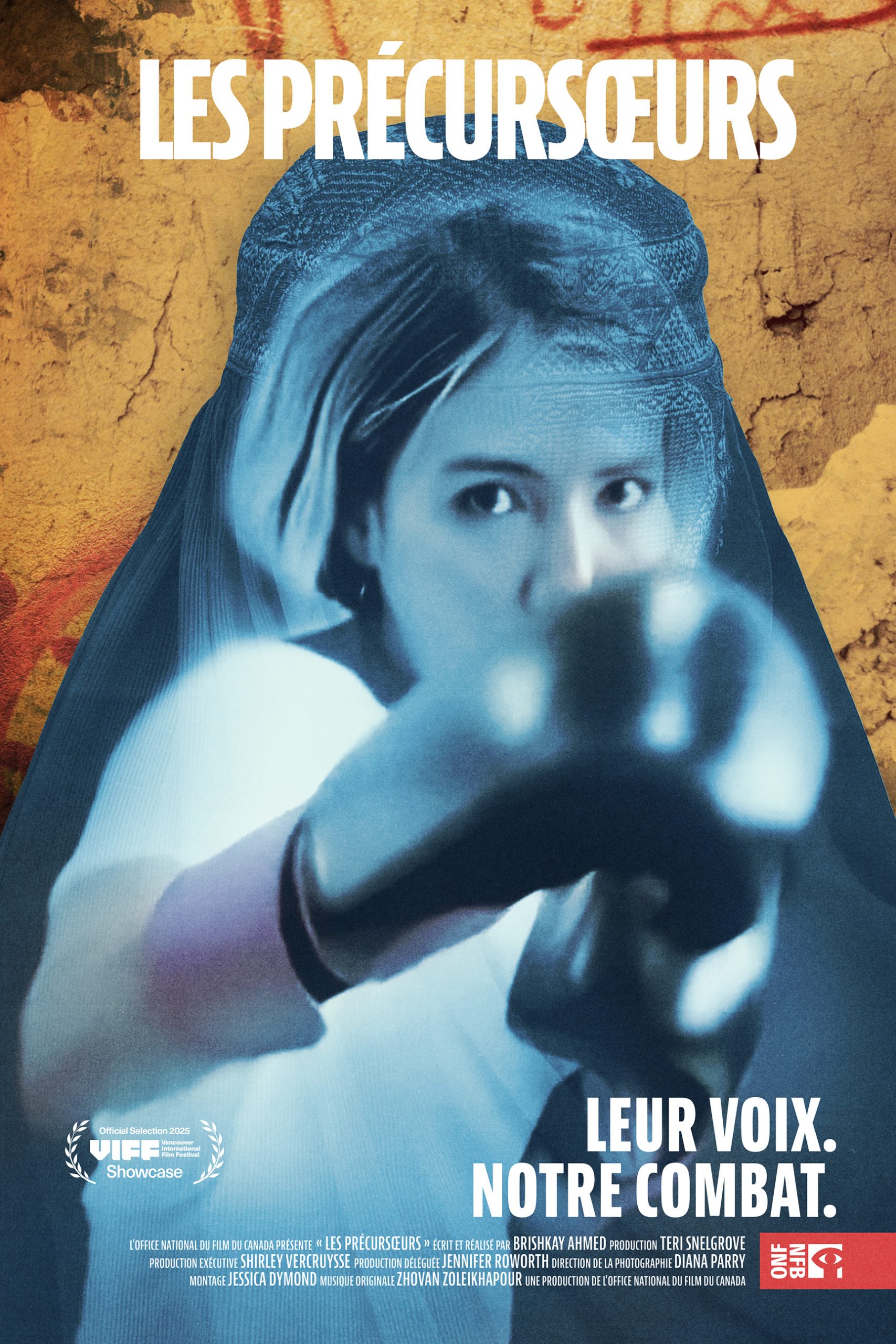
In the Room is now available for free streaming across Canada on the National Film Board of Canada’s platforms nfb.ca and the NFB app.
- English version (original version): https://www.nfb.ca/film/in-the-room/
- French subtitled version: https://www.onf.ca/film/les-precursoeurs/
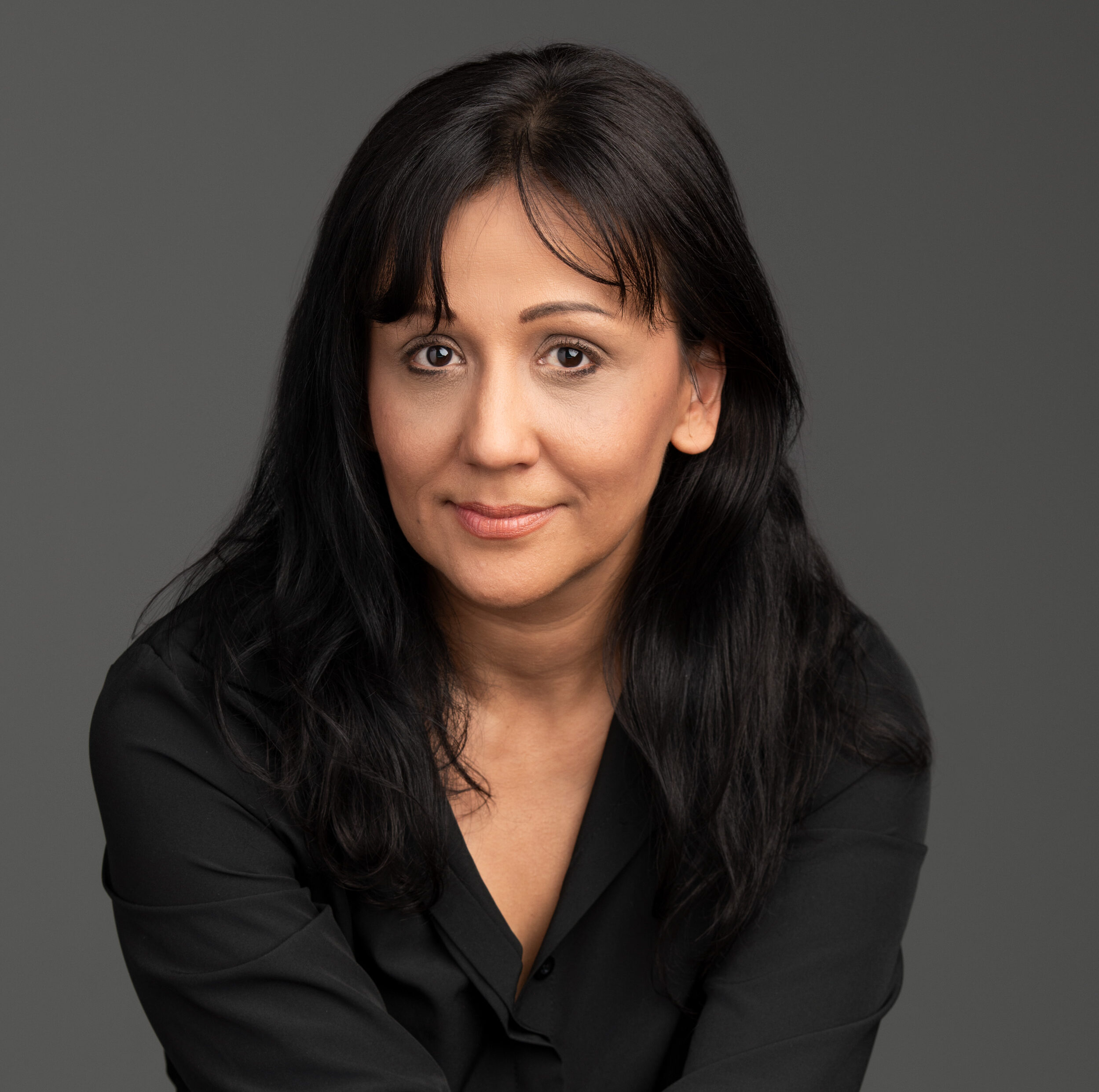
Photo : Emily Cooper
Brishkay Ahmed is a Canadian-Afghan filmmaker, writer, and journalist. She is known for the films In the Rumbling Belly of Motherland (2021), Fatima in Kabul (2021), and Boutique (2025). In honor of the centenary of Afghanistan’s independence from British rule, Ahmed was commissioned to write and direct the documentary STORY OF OUR INDEPENDENCE for RTA, Afghanistan’s oldest public broadcaster, in 2019.
Les commentaires sont fermés.